
hessian.AI alumni startup etalytics expands into the U.S
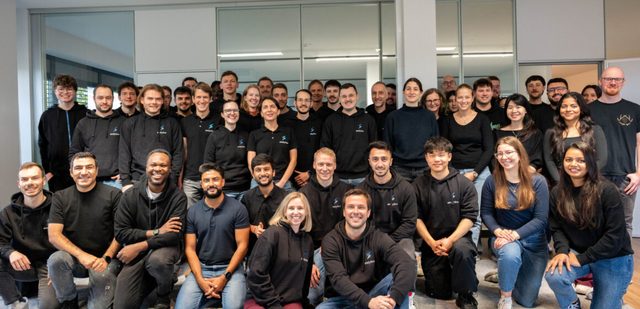
The Darmstadt-based deep tech scale-up etalytics continues to grow and will open an office in the San Francisco Bay Area in the U.S. in May 2026. At the same time, the number of employees at its headquarters in Darmstadt has doubled to 76 within 15 months. etalytics exemplifies the growing importance of AI innovations from Hesse. etalytics develops software for the AI-based optimization of energy systems as well as AI assistants for energy management in industry. The company emerged from the Technical University of Darmstadt and was part of the highly selective 2022/2023 accelerator batch of hessian.AI | AI Startup Rising.
With its new location in the USA, etalytics aims to expand its activities in a key international market. The company specializes in the intelligent control of complex energy infrastructures, such as cooling, heating, and ventilation systems, as well as flexible on-site electrical generation plants. The goal is to reduce energy losses and CO2 emissions, lower energy costs, operate systems more efficiently, and strengthen the resilience of critical infrastructures. Furthermore, the solutions reduce manual monitoring efforts, accelerate root cause analysis, and simplify reporting and compliance requirements.
“With our new location in the Bay Area, we are taking the next logical step on our journey from a Darmstadt-based deep-tech spin-off to a leading global AI company for industrial energy systems. The San Francisco Bay Area is one of the world’s most important hubs for AI, deep tech, data centers, and digital infrastructure. That is exactly where we want to be—close to technological innovation, strong partners, and a market where intelligent, resilient, and energy-efficient systems are becoming a decisive competitive factor,” says Dr. Niklas Panten, CEO of etalytics.
The U.S. is a key growth market for the data center sector, where the demand for smart solutions for energy efficiency and resilience continues to rise. According to the U.S. Department of Energy, electricity consumption by data centers in the U.S. rose from 58 terawatt-hours in 2014 to 176 terawatt-hours in 2023. A further increase to 325 to 580 terawatt-hours is expected by 2028. This could raise their share of total U.S. electricity consumption from 4.4 percent to 6.7 to 12 percent. (Source: U.S. Department of Energy).
The technological foundation of this deep-tech company stems from research conducted at TU Darmstadt. The etaONE® platform developed by etalytics is a software platform specifically designed for AI-powered analysis and real-time optimization of complex industrial energy systems. It is complemented by a new AI assistant for energy management, which expands on etalytics’ highly precise AI-powered optimization models and helps users make informed decisions based on complex energy data more quickly. The solution is used in the automotive industry, the pharmaceutical and chemical sectors, and data centers, among others.
The Darmstadt-based company’s clients include Volkswagen, Stellantis, Equinix, NTT, Digital Realty, Sanofi, and Merck. In practice, etalytics achieves average savings of 20 to 50 percent through optimization. One example is the Merck site in Darmstadt: there, electricity consumption for cooling in an optimized plant segment was recently reduced by an average of 21 percent within three months.
This growth was preceded by a funding round in 2025, in which etalytics raised 16 million euros, according to the company. Investors include Microsoft and Alstin Capital, a venture capital fund managed by Carsten Maschmeyer. The company plans to use the funds to further develop its software and accelerate its international expansion. etalytics is also continuing to grow in Darmstadt. As early as fall 2025, the company tripled its office space at the location.
“Darmstadt remains our central hub for research and development,” says Dr. Thomas Weber, CSO of etalytics. “From here, we develop technologies that are used internationally in energy-intensive applications.”