
hessian.AI at PyCon DE & PyData 2026: Strengthening Collaboration Across Open Source, Research, and Startups
For three days, PyCon DE & PyData 2026 brought together developers, researchers, founders, and open-source contributors from across Germany and beyond. As Germany’s leading Python conference, the event connects the Python ecosystem with data science, artificial intelligence, and open-source innovation — creating a space where technology, collaboration, and community intersect.
hessian.AI | the Hessian Center for Artificial Intelligence — actively contributed to this environment throughout the week with multiple formats that connected research, entrepreneurship, and community-driven development. From hands-on open-source collaboration to startup exchange and high-level discussions on innovation and investment, the center played a visible role across several parts of the conference program.
Launching the Week with Open Source Collaboration: PyCon DE Sprint Day
The week began with the PyCon DE Sprint Day, hosted at hessian.AI. Sprint Days are a central element of open-source culture, providing dedicated time for contributors to collaborate on real-world projects, share knowledge, and strengthen community-driven software.
Participants worked side by side on a diverse set of open-source tools and platforms — ranging from documentation improvements to infrastructure tooling and emerging AI integrations. For several attendees, this marked their first contribution to an open-source project, lowering entry barriers and encouraging continued engagement beyond the conference.
During the Sprint Day, contributors worked on several projects, including:
- Pixi Documentation Improvements
Participants enhanced user guides and improved the py-rattler API documentation, bringing fresh perspectives to the Pixi ecosystem. The sprint welcomed contributors of all experience levels and was led by Travis Hathaway. - Improving Tooling for conda-forge
Work focused on conda-smithy, the command-line interface powering conda-forge automation. Contributors added type hints, modernized test structures, and triaged open issues under the guidance of Jaime Rodríguez-Guerra. - openSpawner
This project explored isolated development environments based on Flask, Docker containers, and Traefik. The sprint focused on integrating vcoder to enable personalized, browser-based development environments. The work was led by Rainer Wieland. - RDMO – Research Data Management Organiser
Contributors worked on extending the Django- and React-based platform by implementing the MCP Protocol, enabling large language model (LLM) services to interact directly with RDMO projects. The sprint was led by David Wallace. - AI-Assisted Coding & Open Source: Opportunity, Risk, and What Comes Next
This sprint focused on the broader implications of AI-assisted coding tools, including agent-generated pull requests and the changing role of maintainers. Participants explored questions around best practices, responsible tool usage, and the long-term impact of AI on open-source ecosystems. Open to all experience levels, this session encouraged reflection and discussion about how open-source culture may evolve in the coming years. The session was led by Simon Schampijer.
By hosting the Sprint Day, hessian.AI supported one of the core principles behind modern AI and software development: shared infrastructure built through collaboration.
Creating Space for Dialogue: The AI Startup Lounge
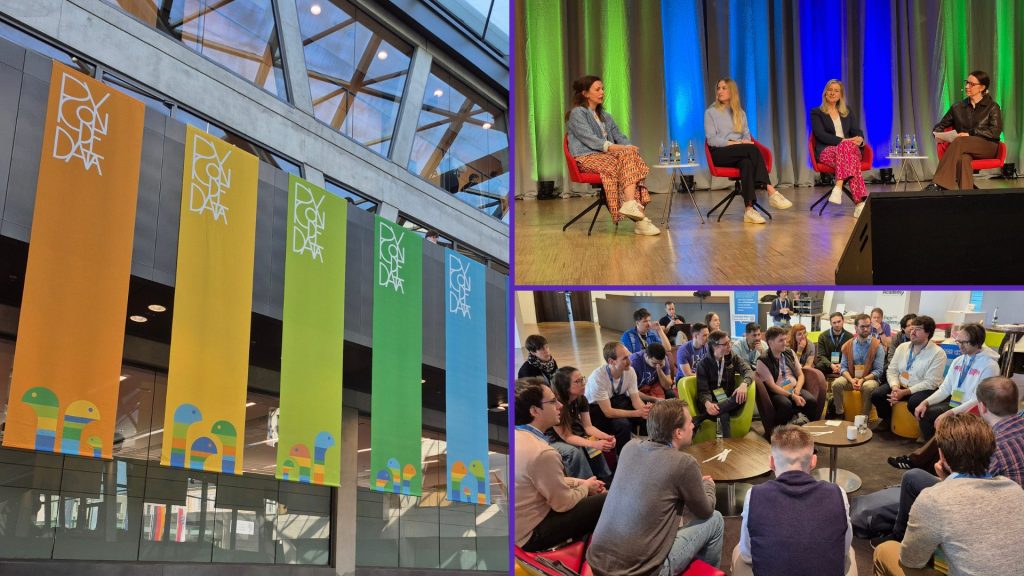
Midweek, hessian.AI hosted the AI Startup Lounge, a dedicated format designed to foster open discussion among founders, developers, researchers, and individuals exploring the path toward entrepreneurship.
Rather than focusing solely on presentations, the format combined short impulse talks with interactive table discussions and open networking. This structure enabled participants to move between conversations, share experiences, and gain insights from peers and experts.
Three impulse talks provided practical perspectives from different areas of the startup ecosystem:
- Diana Kriuchkova (PriorLabs) shared lessons from building AI-driven products and navigating early-stage challenges.
- Julian Risch (Haystack Open Source Team at deepset) highlighted how open-source tools support scalable AI development.
- Dr. Thomas Fraunholz (Open Hippo) discussed experiences from founding and growing an AI startup within a European innovation environment.
Following the impulse talks, participants joined focused table discussions addressing common challenges and opportunities:
- “Hair on Fire” — urgent founder challenges, including product development, hiring strategies, funding questions, and technical roadblocks (Table Captain: Tobi Kehl)
- Startup Curious — exploring entrepreneurship, designed for individuals considering founding their own ventures (Table Captain: Carlina Bennison)
- Tech Stuff — from Python to production, focusing on architecture, scaling, and deploying AI systems in real-world environments (Table Captain: Simon Schampijer)
The AI Startup Lounge demonstrated how innovation benefits from open dialogue, practical exchange, and cross-disciplinary collaboration.
Real-World Perspectives on Innovation: Start-Ups & Investors Panel
A major highlight of the conference program was the Start-Ups & Investors panel, which brought together leaders from across the AI and startup ecosystem.
The discussion focused on the realities of building companies — moving beyond idealized success stories to address the complexity of turning research ideas into sustainable businesses.
The panel featured:
- Ina Schlie, former SVP at SAP, co-founder of encourageventures e.V., and experienced board advisor
- Sara Jourdan, AI founder and postdoctoral researcher at TU Darmstadt, recognized in Forbes 30 Under 30
- Jovana Walter, CFA, Managing Partner at Futury Capital
- Carlina Bennison, Co-Lead of the AI Startup Rising program at hessian.AI
Together, the speakers shared insights into funding strategies, product development, risk management, and long-term growth — offering valuable perspectives for both current and future founders.
The panel emphasized the importance of collaboration between researchers, investors, and entrepreneurs in building strong innovation ecosystems.
A Scientific Perspective on Innovation: Keynote by Hilde Kühne
Another significant moment during PyCon DE & PyData 2026 was the keynote by hessian.AI alumna Hilde Kühne, who provided an in-depth perspective on the development of multimodal artificial intelligence.
Rather than presenting multimodal AI as a sudden technological breakthrough, the keynote traced its origins back over more than 15 years of incremental progress driven by research communities worldwide.
The presentation highlighted how the Python ecosystem — including widely used tools such as NumPy, SciPy, and PyTorch — enabled researchers from fields such as computer vision, natural language processing, and speech recognition to collaborate more effectively. Shared frameworks allowed teams to exchange code, build upon existing work, and accelerate development across disciplines.
Hilde Kühne also addressed current challenges facing the field, including increasing data complexity, benchmarking difficulties, and the gap between public expectations and technical reality.
A central message emerged clearly: Many of today’s advances in multimodal AI would not have been possible without open-source infrastructure and sustained collaboration across communities.
The keynote provided both historical context and a forward-looking perspective on the role of shared technologies in advancing AI research.
Supporting Accessibility Through AI: Subtitles by PHONT
Accessibility was another important theme during the conference.
The hessian.AI alumni startup PHONT contributed AI-powered subtitle technology to conference video content. Their system goes beyond traditional transcription by capturing not only spoken words but also tone, emotion, and speech patterns.
By combining advanced audio processing with user-centered design, PHONT demonstrates how artificial intelligence can enhance accessibility and improve the way digital content is experienced by diverse audiences.
This contribution reflects a broader commitment within the hessian.AI ecosystem to inclusive technology development.
Why PyCon DE & PyData Matters for hessian.AI
PyCon DE & PyData represents more than a technical conference. It serves as a meeting point where open-source collaboration, academic research, and industrial innovation intersect.
Many of the tools used daily in AI development originate from global communities working collaboratively across institutions and disciplines. Supporting and contributing to such events aligns closely with the mission of hessian.AI: connecting fundamental research with real-world impact.
Through formats such as the Sprint Day, AI Startup Lounge, and panel discussions, the center contributed to strengthening connections between researchers, developers, founders, and investors.
These interactions play a critical role in transforming research results into practical technologies and successful ventures.
THANK YOU to Carlina Bennison, Simon Schampijer, and Alexander C. S. Hendorf, for making the formats possible and to Martin Borus, Vishal Vishal, Lev Dadashev, Philip Hartmetz, Severine Rupp, Tobi Kehl, and Firuzan Eda Eskiyurt for their invaluable support.